Linen, cotton, and polyester behave very differently once they reach the altar. Linen absorbs significantly more moisture than cotton, dries quickly, and carries centuries of church tradition, which is why it remains the standard for corporals, purificators, and lavabo towels. Cotton is an easier-care, budget-conscious alternative for less critical pieces. Polyester resists wrinkles but absorbs poorly, a real problem for anything that must soak up spilled Communion wine. Property Linen Cotton Polyester / Synthetic Blends Absorbency High, roughly 20% of its own weight in moisture Moderate, roughly 7% of its… Read more Linen vs. Cotton vs. Polyester for Altar Linens and Vestments →
Renaissance Linen is Ecclesiastical Sewing’s best-selling fabric, and for good reason. This 100% linen, 4.5 oz, 122 thread count plain weave gives fair linens, purificators, corporals, and lavabo towels the crisp hand and hemstitch structure church sewing calls for, in 60 inch bright white yardage, with a 7 to 14 day lead time and extra yardage recommended for shrinkage. Spec Renaissance Linen Fiber 100% linen Weight 4.5 oz Thread count 122 per square inch Weave Plain weave, smooth finish, slight sheen Color Bright white Standard width 60 inches Lead time… Read more Irish Linen for Vestments: Why Renaissance Linen Is Our Altar-Linen Standard →
Wine, blood, wax, and scorch each call for a different response on church linens, and getting the order wrong can turn a stain permanent. The rule that matters most: never machine-dry a stained linen, and never press it at normal heat, until the stain is fully gone, since heat sets blood and wine into the fiber. Wax is the one controlled exception, a low, indirect heat through absorbent paper is the removal method itself, not something applied after the fact. Scorch, unlike the others, usually cannot be removed at all.… Read more Removing Wine, Blood, and Wax Stains from Church Linens →
Beautifully pressed altar linens begin with what happens before the iron ever touches the fabric. Inspect linens for stains first, launder them with a gentle detergent and room to move in the wash, remove them promptly, and press while the fabric is still damp, moving the iron with the grain. Handled this way, altar linens hold their crisp, flat finish and hold up to many more years of parish use. This post is Part 4 in The Complete Guide to Church Linen, Ecclesiastical Sewing’s ongoing series on sewing, mending, and… Read more Laundering and Pressing Finished Church Linens →
To attach lace to church linens without puckering, preshrink and press both the linen and the lace first, then either hand sew the lace with tiny slip stitches along the finished edge or machine stitch it with a short straight stitch and fine matching thread. The method that matters most in both cases is the same: never pull the lace taut while you work. Let it feed naturally so the finished join lies flat and even, not wavy. This post is Part 3 in The Complete Guide to Church Linen,… Read more How to Attach Lace to Church Linens →
Choosing the right thread for hand-hemming church linens comes down to two different needs. Machine sewing calls for a fine, smooth, high-quality white sewing thread, never heavy quilting or embroidery thread. Traditional hand-hemming asks for something finer still, a single strand of fine white cotton thread, paired with a small needle, so the stitch disappears into the linen rather than sitting on top of it. This post is Part 2 in our series, The Complete Guide to Church Linen. If you have not yet preshrunk your fabric, start with Part… Read more Choosing the Right Thread for Hand-Hemming Church Linens →
A confessional stole is a short, narrow stole a priest wears around the neck when hearing confessions. Violet, the color of penance, is traditional for it. Our reversible pattern pairs a violet side with a white side, the penitential violet traditional to confession and a clean white face for other uses, so a single stole does the work of two. Narrow and simple to construct, it is one of the most approachable vestments for a church sewer to make. What is a confessional stole? The stole is the sign of… Read more The Confessional Stole: What It Is and How to Sew One →
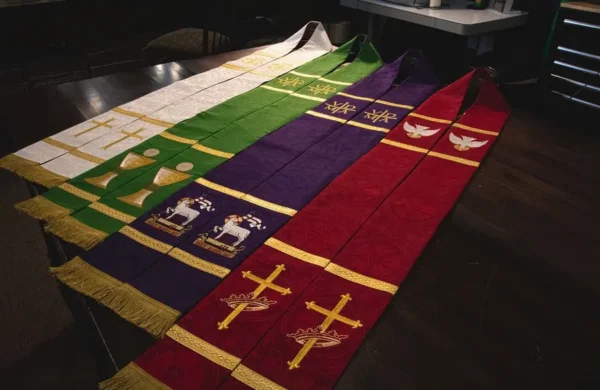
From Roman officials to modern clergy, the stole’s transformation tells an extraordinary tale of faith and authority. This isn’t just about a strip of fabric—it’s about a sacred symbol that has shaped Christian ministry for two millennia. Uncover the hidden meanings behind the colors and designs that define this tradition.

Ecclesiastical Sewing thanks you for your steadfast support in preserving classical liturgical vestments, which drives our mission to offer beautiful designs. Wishing you a joyful holiday filled with blessings!
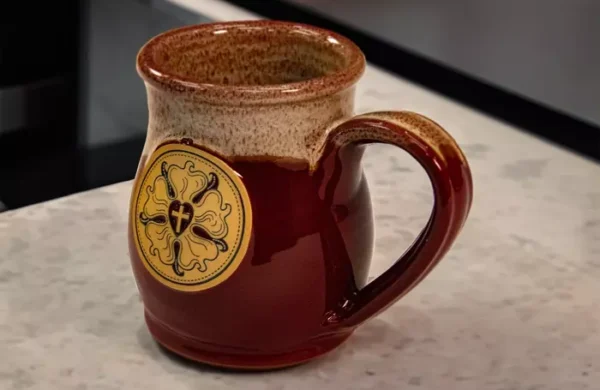
This October, celebrate Pastor Appreciation Month and Reformation season with our limited-edition handcrafted mugs. Each one is hand-thrown by local Minneapolis artists, capturing cozy fall vibes in warm maroon, cream, caramel, and dark chocolate tones. Perfect for gifting to your pastor or enjoying during crisp autumn mornings, these mugs are uniquely crafted, available in extremely limited quantities. Once they’re gone, they’re gone—so grab yours while they last!
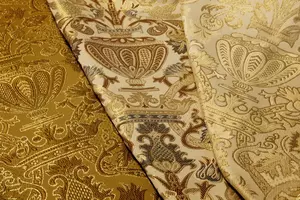
Ecclesiastical Sewing is excited to announce one of their biggest sales of the year on the 4th of July. Enjoy 25% off all fabrics in the store, no code needed. It’s a perfect opportunity to stock up on high-quality materials for your liturgical sewing projects. Mark your calendars and plan your fabric wish list now!
If you are a researcher or someone with a love of the history of Hand embroidery, check out the opportunities to present a paper on your area of expertise. If you are considering attending the conference, there are several museums in Lorca. Museo Paso Blanco and Museo Azul de la Semana Santa.
Exciting news! Our new website is live. We invite you to explore and share your feedback via email. If you encounter any issues or bugs, please let us know. Thank you for your continued support!

Altar Guilds play an important role in the life of the church. Some churches have small altar guilds while others have large guilds. Altar guilds serve many functions in the life of the church. They care for the flowers, linens, and vestments at a basic minimum. They may make the linens and vestments, set communion, and so much more.

The Five Day Conference Includes several different Course Offerings: Beginning Stole Making, Advanced Stole Making, Pulpit Falls, and Monastic Chasubles. Most students will start with the Beginning Stole Making Course and move on to the Advanced Stole Making or Pulpit Falls. Course Details, kit fees, and other pertinent information are available on the conference website.

You must be logged in to post a comment.