
A DIY stole can be a truly special gift. We hope to help you make a stole that will serve your pastor, priest, or deacon for many years to come. Here at Ecclesiastical Sewing we have the top 10 materials for your DIY stole-making projects!

Featuring our beautiful violet stole and chasuble sets for Lent and Advent. They’re carefully made with rich Fairford brocade, perfect for church seasons. The St. Irenaeus Collection offers elegant Gothic and Monastic options.

The First Pattern to go with Silk Dupioni: 5-inch stole kits which include–face fabric, canvas, and lining–for making your own stole, but only one stole kit–Silk Dupioni–comes in both sizes online. Our 5”clergy stole pattern is one of the patterns that work with size “B” kits–this one will only work with Silk Dupioni stole kits. Each of our stole patterns has the option for different lengths of hem, which is perfect for sewing for different heights.
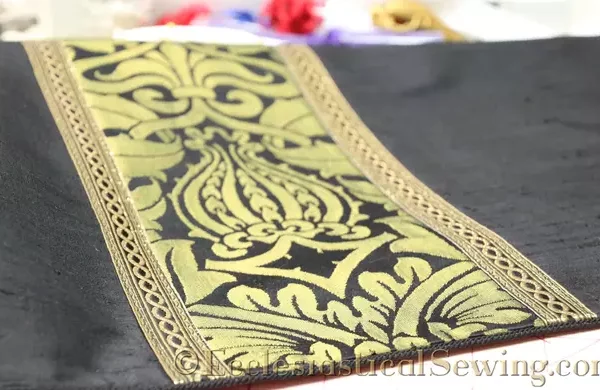
The Saint Augustine Chalice Veil is made from Silk Dupioni, which is a great option for black vestments used on Good Friday. Silk Dupioni is a good fabric choice for church vestment making because it looks rich, has a natural sheen, and a depth of color. Combining a solid fabric with a patterned orphrey allows the vestment to be visible from more than the first few rows of church pews.
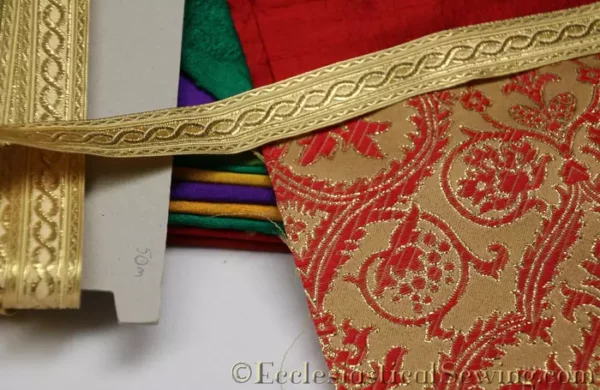
Our new 4 1/2″ pastoral stole has a guideline for cutting stole orphreys for use at the lower edge, as well as for use on the upper chest. The orphrey size and guideline placement have been developed based on the design rule of thirds and by years of practice. Now, these placement and cutting sizes are “guidelines” and are not meant to take the place of checking to verify that the placement works for each and every situation. They are intended to help create a sense of balance and proportion when making a pastoral stole, by providing a starting point for the placement of orphrey bands or appliques.

Each fabric is beautiful in its own special way, be it color, pattern, texture, or drape. Each has characteristics that lend it to be the perfect liturgical fabric for special use. The fiber contents are as varied as the patterns, fabrics, and weaves. The price points range from moderate prices for churches on a budget, to exclusive silks and cloth of gold fabrics intended for unique and special sacred vestments. There are solids, piece-dyed, and yarn-dyed fabrics, brocades, metallics, plain weaves, and crisp linens that range from the brightest whites to the deepest and richest violet, and the warmest and richest golds and vibrant reds.

Finished Fairford Black/Gold Pastoral Stole, a farewell gift for our pastor. This stole is perfect for Ash Wednesday and Good Friday. The black silk dupioni and Fairford brocade orphrey bands in black/gold create a stunning look. with a budget-friendly materials like silk dupioni and the beautiful St. Benet braid trim. Added a cross and chain for the finishing touch.

Chalice veils are very simple to construct. The beauty of the finished piece lies in excellent workmanship construction techniques and appropriate design placement. The design of a chalice veil can be as simple or elaborate as the imagination allows. Although the chalice veils do not have any trim around the edge, it is appropriate to use a cord as a decorative finish at the seam. Chalice veils often have a cross motif placed on the front edge too.

Using modern techniques to complete an Ecclesiastical Vestment set can be a lifesaver. The designs can often be modified in size to fit specific needs. The colors can often be selected to suit a particular occasion or color scheme. Selecting someone who is well versed in the Ecclesiastical Arts, as well as fluent with modern machine embroidery can be a delightful way to expand design possibilities for enhancing Ecclesiastical Vestments…
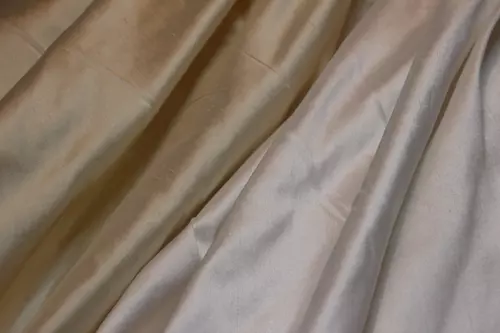
Choosing fabrics for Ecclesiastical Sewing involves factors like season, budget, and project duration. Silk Dupioni and cost-effective options suit various vestment pieces. True Ecclesiastical Fabrics like Fairford and Wakefield, though pricier, offer quality and durability. Their longevity justifies the investment, making the cost minimal over the Vestment’s service life.

You must be logged in to post a comment.