
Wash on Friday, Iron on Saturday
Wash on Friday, Iron on Saturday
Washing and Ironing. Two words I usually Do Not Enjoy, especially when put together. I used to iron everything years ago, the way my mother taught me, and her mother before her…but then life got busy. Now, ironing is a reserved activity for something truly special: the men’s suits, my daughter’s dresses, and my above-the-normal clothes. As the events of the past two days turned out, there was a special reason to be ironing.
The reason? Ecclesiastical Linen.
That’s right. Linen. Linen is the reason for doing the laundry today. When I recently framed up the Easter Set Pulpit Fall Design discussed in Hand Embroidery Design Framed Up, I utilized the last piece of linen in my collection that I had preshrunk and ironed. Bother. Well, over the past year or so, whenever Hedgehog Handworks had one of their sales, I purchased linen. I have several favorite linens which are purchased from Hedgehog Handworks. They are Alba Maxima, Alabaster Angel, and Ecclesiastical Linen. Hedgehog Handworks carries many more linens, but these are my favorites for the type of embroidery I do. There were various yardages for all three types of linen in the stash, but there they were, in the original bags, marked as to type of linen, and all unshrunk. Bother. No going forward with framing up anything else until the laundry is done.
But wait… that is not all. There is also a linen cambric. This linen is very different from the linens I purchase from Hedgehog Handworks. It is a lighter-weight linen suitable for whitework for various items such as Fairlinens (this is the main linen on top of an altar), and smaller linens such as purificators, palls, lavabo towels, and corporals. There were several precut purificators, and 5 yards of this linen, all of which are still unshrunk. Bother.
Well, it is really not that bad. Instead of turning this into an Eor type of day, (apologies to Winnie the Pooh), it was time to have some fun. I had been holding off, waiting for a day when I could do all of the linen preshrinking at one time. Today was THE day. Out came the largest pans I own in the kitchen, and the process began. First, there was the getting each piece entirely wet process. Next, there was the plunge into hot, and I mean HOT water. After a few minutes, there was the plunge into the coldest cold water to be had. Wait a few minutes, then repeat the process two more times. The final step was to plunge the linen into hot water and leave it until the water cooled down. My camera was downstairs during the plunging part, so there are no photos.
Some may choose to throw their linen in the washer and shrink it. Not me. My washer is old. This is expensive linen, and it deserves the time and care taken to do the preshrinking by hand. That is my opinion, but if using a washing machine works for others, that is great!
Once the water is cool, a final quick rinse, a roll up in a white terry towel, and off to the ironing board. The ironing board part is a bit tricky. There is always the danger of scorching the linen when ironing it dry. I prefer to have it air-dry part of the way and to finish it by pressing. I use stems to aid with stubborn wrinkles. Start in the center and work to the outer edges, trying to make sure that the piece remains squared up.
Once the linen is pressed, the fibers may still retain a bit of moisture for a while, and I leave the pieces out flat to continue air drying overnight. I check them again the next day to see if they need touching up in a few spots. Some linens require this more than others.
I find the lightweight linen cambric presses very nice. I love this lightweight linen! It has a body and is still lightweight.
Alba Maxima is one of my favorite linens to use for Ecclesiastical Embroidery Designs but it takes some work to get this linen pressed out. When it is wet, it almost has the weight and appearance of canvas. Almost. The trick to pressing this linen is to minimize wrinkles in the first place during the shrinking process. Try not to wring this linen. Those wrinkles that come from trying to wring out excess water become a challenge to press out.
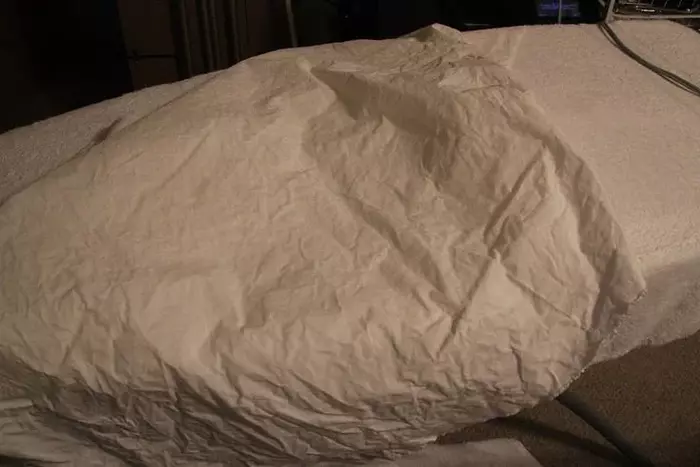
This photo shows a piece of Ecclesiastical Linen before pressing.
The Ecclesiastical Linen does take a little work as well to get out the wrinkles that come if you wring it out, so avoiding that helps.
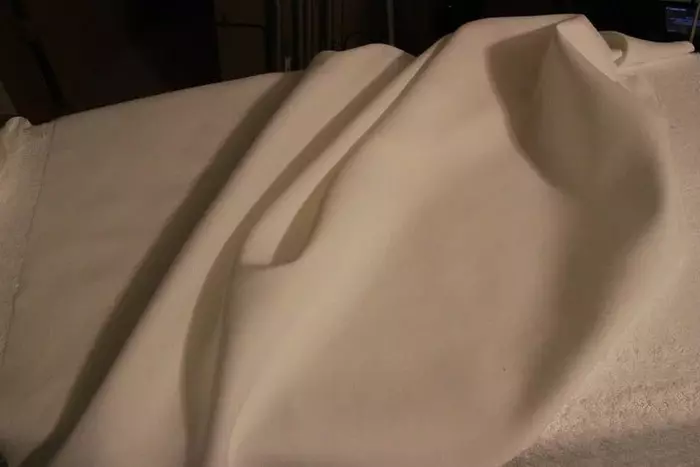
As this was pressed, the linen fibers were fine and even, and the linen pressed up very nicely in the end. The photo above is the piece of Ecclesiastical Linen after pressing. This is such wonderful linen!
Next up: Alabaster Angel. Let’s see how that presses. Surprisingly, this linen presses very nicely as well. It looks great after the final press.
After working with all three linens from Hedgehog Handworks, my favorite linen to the press has to be the Ecclesiastical Linen. It presses like a dream – if that is possible when it comes to pressing linen. What seems to help when pressing all of this linen is to go over the entire linen piece once. The goal is to remove most of the excess moisture. The piece may still feel slightly damp, but it should no longer be wet to the touch. After the entire piece has been gone over once with the iron, it is time for steam. Please be sure if you use Steam, that you have an iron that you can trust.
Do not use an iron that has a history of spitting, sputtering, or hissing, especially if at any time it spits or sputters out rusty-colored water or steam. I like to go over the linen a second time, using the continual steam setting, and work a section at a time until it has a smooth and even surface. While doing this, it is important to never stretch the linen or to distort or skew the grainline.
On occasion, there are bubbles from an area that is still damp. Gently go over the damp area with the bubbles a few times until it starts to dry. Carefully ease the bubble part into the rest of the linen that is dry. I must say, the more linen I ironed, the better job each piece received. Practice does make perfect. And I can honestly say I am very glad that I do not have to iron linen tablecloths and napkins or other items regularly! So it really was not a bother to do the washing and ironing after all.
How about you? Do you have linen-pressing stories or tips to share? Please leave a comment with your tips and hints. And after all of this washing and ironing, it’s time for a free linen embroidery design.
Solo Dei Gloria
Be sure to visit our online store front Ecclesiastical Sewing where you may shop for Liturgical Fabrics, altar linen fabrics, church vestment-making patterns, liturgical machine embroidery designs, church vestment trims and notions and so much more. You may also find us on Ecclesiastical Sewing on Facebook, Twitter, and Pinterest. Sign up for our mailing list at the bottom of the page on our online store front and receive a free copy of our Small Linens Booklet as our way of saying thank you for following along.
The Warm & Fuzzies
Church Linen Hand Embroidery Design for Purificator
Good Friday Pulpit Fall
Carlisle Fabric in White for Roman Square Yoke Surplice Patterns
Iron on Cross Appliques


 RSS - Posts
You must be logged in to post a comment.